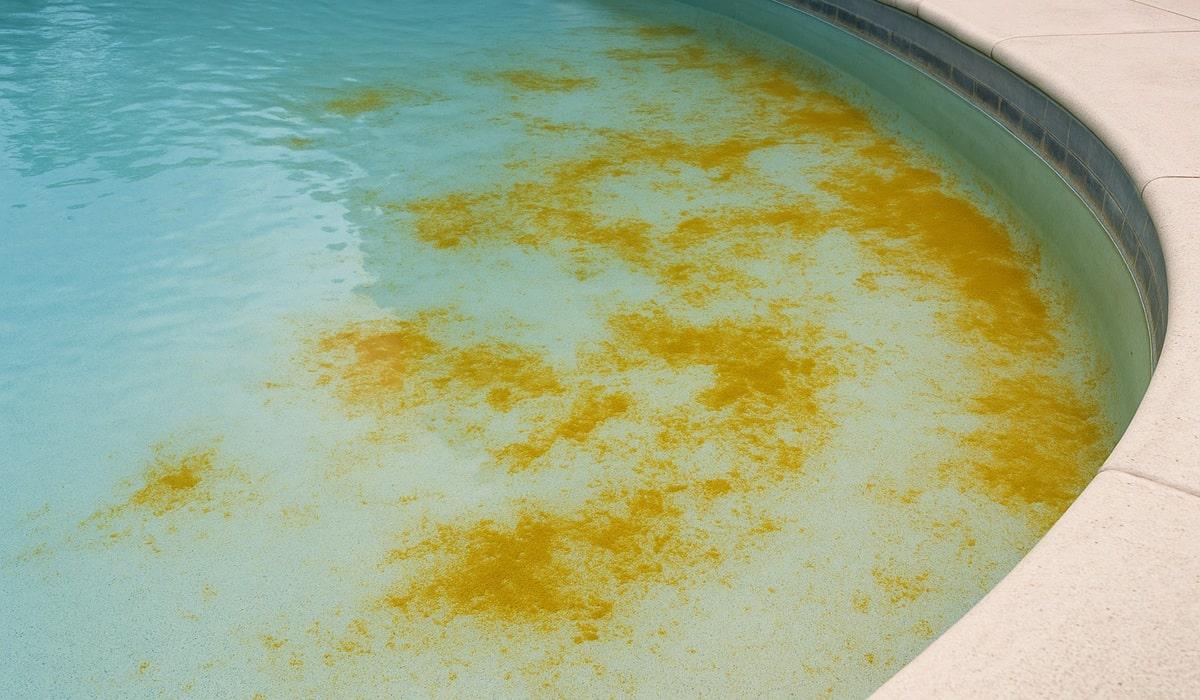
Is That Dirt in Your Pool, or Mustard Algae?
Why It Keeps Coming Back
You brush the yellow or brownish dust from the walls or floor of your pool. It disappears, the pool looks clean again—and a few days later, it’s back.
It may look like dirt, dust or pollen.
But it could be mustard algae.
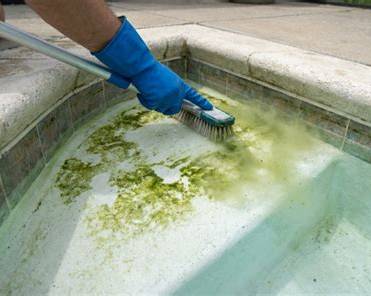 Mustard algae, sometimes called yellow algae, can be particularly frustrating because it doesn’t always make a pool look green. The water may remain relatively clear while yellowish or brownish material repeatedly appears on the walls, steps or floor.
The important question is: How do you know whether you’re looking at ordinary debris or an algae problem?
- What Does Mustard Algae Look Like?
Mustard algae typically appears as a yellow, yellow-green or brownish coating on pool surfaces.
Unlike the obvious green water many homeowners associate with algae, mustard algae can be subtle.
You may notice what looks like:
- Yellow or brown dust on the pool floor
- Pollen collecting on the walls or steps
- Dirt appearing in the same areas repeatedly
- Yellow patches in shaded areas
- Material that brushes away very easily
That last symptom is particularly confusing.
If it brushes away so easily, shouldn’t it just be dirt?
Not necessarily.
- The Biggest Clue: It Keeps Coming Back
Dirt and pollen can certainly accumulate in a swimming pool, particularly outdoors.
But pay attention to what happens after you remove it.
If you brush or vacuum the material away and yellow patches repeatedly return to the same areas, particularly walls or shaded areas, you may be dealing with algae rather than ordinary debris.
Mustard algae can loosen from the surface when brushed, making it appear that the problem has been solved.
Then it returns.
That’s why repeatedly vacuuming or brushing the pool without identifying the cause can become frustrating.
- Why Does Mustard Algae Like Shaded Areas?
Pay particular attention to areas of the pool that receive less sunlight or have poorer circulation.
These can include:
- Steps
- Corners
- Behind ladders
- Along walls
- Beneath pool features
- Areas with weaker circulation
Finding recurring yellow material in these locations doesn’t automatically prove that you have mustard algae, but the pattern can provide an important clue.
A professional diagnosis should consider the appearance, location, water chemistry and how quickly the material returns.
- Why Doesn’t Chlorine Just Kill It?
This is where pool chemistry becomes important.
Simply having a measurable chlorine reading doesn’t tell you everything about how effectively chlorine is working in the pool.
Cyanuric acid (CYA), also called stabilizer or conditioner, protects chlorine from sunlight. But the amount of CYA in the water also affects the amount of free chlorine required to maintain effective sanitation.
That’s why chlorine and CYA shouldn’t be evaluated independently.
If the pool has an algae problem, chlorine demand can also increase as chlorine is consumed dealing with contaminants in the water.
This connects directly with another common summer problem: a pool that seems unable to hold chlorine.
The solution isn’t automatically to keep adding chemicals. The first step is understanding what is happening in the water.
- Circulation and Filtration Matter Too
Pool chemistry is only part of the picture.
Your circulation and filtration system also plays an important role in maintaining clear water.
Areas with inadequate water movement can become more susceptible to problems.
Things worth checking include:
- Pump operation and run schedule
- Filter condition
- Skimmer and pump baskets
- Return flow
- Cleaner operation
- Areas of poor circulation
If a pool repeatedly develops algae in the same location, the circulation pattern may be worth investigating along with the chemistry.
- Your Pool Equipment Can Be Part of the Reinfection Problem
One of the easily overlooked aspects of a recurring mustard-algae problem is the equipment that has been in contact with the pool.
That can include:
- Pool brushes
- Nets
- Vacuum equipment
- Cleaner components
- Toys and floats
- Other equipment used in the water
Treating the pool while overlooking contaminated items can contribute to the problem returning.
That’s one reason a persistent algae problem needs a complete treatment strategy rather than simply brushing away what you can see.
- Is It Definitely Mustard Algae?
No.
Yellow or brown material in your pool can have several causes, including ordinary dirt, pollen and other debris.
Appearance alone isn’t always enough to make the diagnosis.
That’s why we don’t recommend assuming every yellow patch is mustard algae and immediately adding large quantities of chemicals.
Instead, look at the complete picture:
Where is it appearing?
Does it brush away easily?
How quickly does it return?
Does it repeatedly appear in the same areas?
What are the chlorine and CYA levels?
Is the circulation and filtration system working correctly?
Those clues help determine what you’re actually dealing with.
Why Does My Pool Algae Keep Coming Back?
If you’ve treated your pool for algae only to have the problem return, something may have been missed.
Possible contributors include:
- Inadequate sanitizer levels
- Chlorine and CYA imbalance
- Incomplete brushing or treatment
- Poor circulation
- Filtration problems
- Organic contamination
- Contaminated pool equipment
- An underlying water-chemistry problem
Repeatedly treating the visible symptom without identifying the cause can waste both time and chemicals.
How PFS Approaches Recurring Pool Algae
At PFS Pool Services, we look beyond whether the pool simply appears clean on the day of service.
Recurring algae means asking why it is coming back.
That means evaluating water chemistry, chlorine and CYA, circulation, filtration, equipment operation and the pattern of where the problem is occurring.
Our technicians also have an advantage that homeowners don’t always have: we see the pool week after week.
If yellow material is removed and repeatedly returns to the same wall, step or shaded area, that pattern matters.
Identifying the underlying problem allows us to treat the cause rather than repeatedly treating the symptom.
The Bottom Line
If yellow or brownish material keeps appearing in your pool, don’t automatically assume it’s dirt.
And don’t automatically assume it’s algae either.
Brush it. Observe where it returns. Check the chemistry. Check the circulation. Then identify the problem before treating it.
If that yellow “dust” keeps coming back, it may be telling you something about what’s happening in your pool.
PFS Pool Services can help determine the cause and get the pool back under control.